
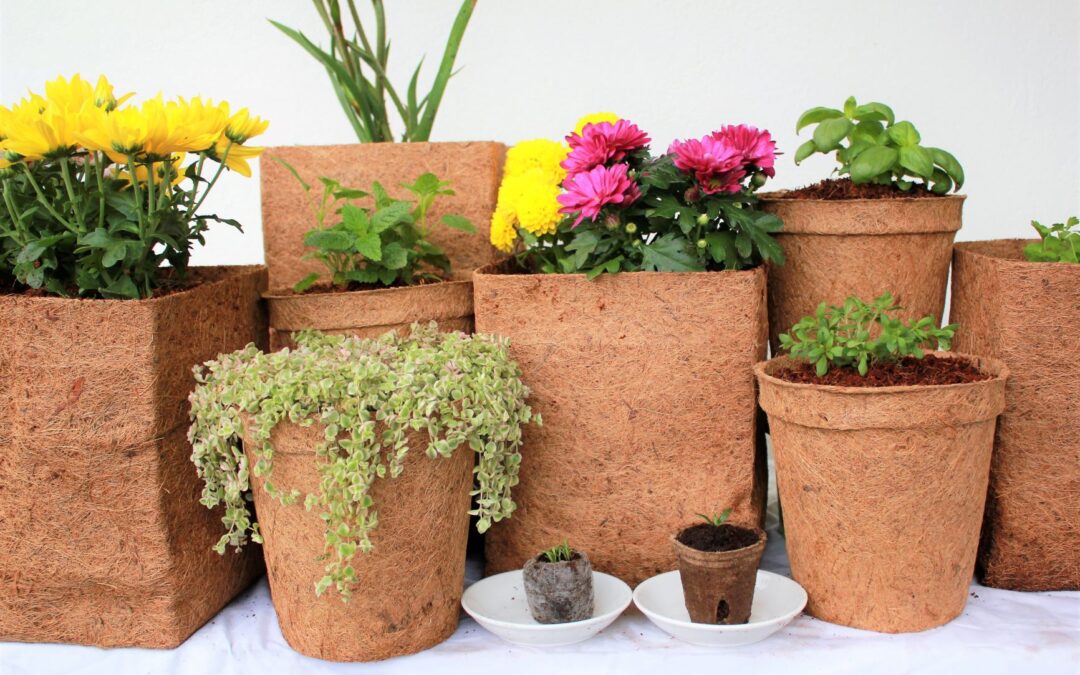
Coir pots or coconut fiber planter are planter containers constructed using the fibrous husk from the coconut. Since they may be placed straight in the ground, such soft and flexible pots are great for transplanting young plants. Coconut fiber is a fantastic growth medium in and of itself. When formed into these handy pots, coir provides several benefits to the plants while easing your gardening efforts.
How Are Coconut Fiber Planter Made?
The coconuts you’ve noticed in grocery stores have already had their outer covering removed to expose their shells. When the coconut falls off the tree, they look nothing like the spherical, brown fruit you’re used to seeing. The coconut has a thick fibrous husk surrounded by a green outer layer.

Rugs, ropes, beds, and baskets have traditionally been made from the fiber husk. However, not all of this husk is used in these goods. Only pithy dust and tiny coir fibers remain. Those were originally disregarded but have lately gained prominence in the landscaping community. Loose coconut fiber can be used as a growth medium or amendment to the soil by gardeners. Coir may also be formed into pots.
The fibrous component is cleaned and dried before being used to produce these coco coir pots. This reduces the salt level, which is commonly present owing to the saline water and air in tropical locations where coconuts thrive. Molds are used to mold the clean fibers into pots. Some facilities utilize machines to form the pots, while others use dedicated personnel to shape them by hand. After shaping, the pots are meticulously cut of extraneous fibers.
The Advantages of Using Coconut Fiber Planter
Although this fibrous substance provides several benefits to plants, coconut coir pots are an ideal choice for gardening. These benefits distinguish the husks of coconut plant pots from many other methods for establishing new plants.
Permeability
Air, water, as well as roots may infiltrate the shells of coconut fiber pots for plants. The coir retains water efficiently, keeping your plants wet as they emerge. However, because coir does not keep a lot of moisture, you have no reason to be concerned about the plants drowning. The coir facilitates aeration by enabling air to pass through its porous surface.
Biodegradability
Coconut coir pots are 100% biodegradable. They are composed entirely of organic substances and will readily decompose and return to the soil. This indicates that when you’ve decided to transplant the plants to an outside garden or bigger pots, you can swiftly and effortlessly drop those pots into the ground. This reduces the plant’s damage and allows it to maintain the roots intact.
Sustainability
Coconut coir represents a very environmentally friendly material. In one year, a mature coconut tree may yield 150 coconuts. Coconut trees typically bear their first fruit at the age of 5 or 6 years and achieve peak productivity after 15-20 years. The tree has a total lifespan of 60 to 80 years. This makes it simple to manufacture a wide range of coir products while minimizing environmental impact. In reality, coconut trees aid the environment by lowering CO² emissions.
Nourishment
Coconut coir contains a neutral pH that ranges between 5.2-6.8. As a result, it becomes a versatile solution for plants of almost any species. Iron, copper, potassium, and zinc are also abundant in coir. Because of its high cation exchange rate, coir may rapidly deliver these nutrients to plants with which it comes into touch.
If you interest to know more information about cocofiber and other coconut derivative products, you can visit our website, You can also click link WhatsApp here to connect directly with us.