
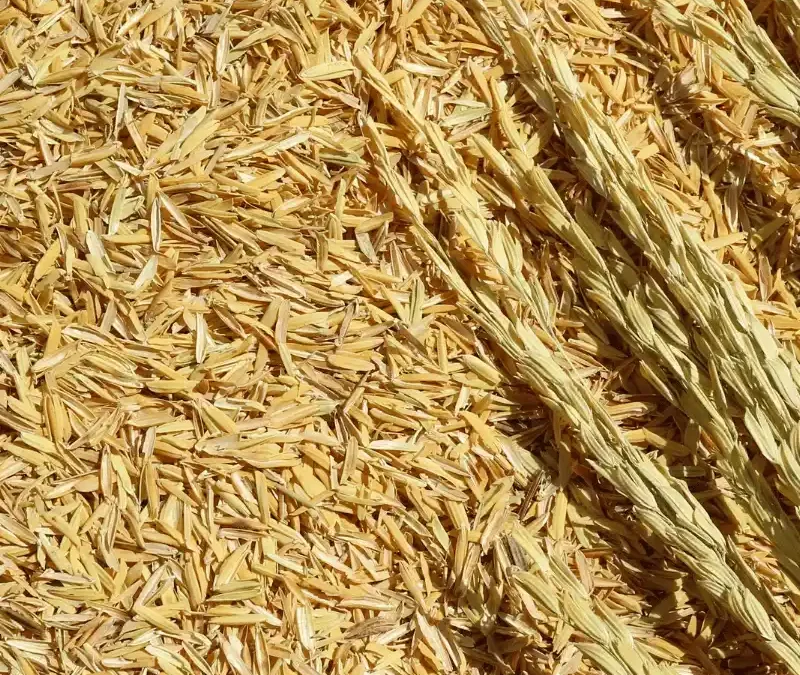
Rice husk is a natural agricultural by-product produced during the milling of rice. It forms the protective outer layer of rice grains and is separated during processing. Although often treated as agricultural waste, this material has considerable potential across several industries. Its lightweight structure, fibrous composition, and natural silica content make it useful for different applications.
As sustainability becomes a growing priority, agricultural industries are exploring ways to use by-products more efficiently. Rice husk offers an accessible option for reducing waste while creating additional value from rice production. From soil improvement to industrial processing, its applications continue to attract attention.
What Makes Rice Husk a Valuable Agricultural By-Product?
Rice husk consists primarily of cellulose, hemicellulose, lignin, and silica. These components contribute to its physical characteristics and determine how it performs in different applications. Its relatively low density makes it easy to handle, transport, and incorporate into various materials.
One of its distinctive characteristics is its high silica content compared with many other agricultural residues. Silica contributes to the structure of rice plants and remains present in the husk after harvesting. This characteristic makes rice husk particularly interesting for applications involving silica-rich agricultural materials.
Rice Husk for Soil Improvement and Horticulture
Agriculture and horticulture are among the most common areas where rice husk provides practical value. Its lightweight structure can help improve the physical properties of growing media. When incorporated into suitable soil mixtures, it can increase porosity and create additional spaces for air movement.
Good aeration is important for healthy root development. Plant roots require oxygen to support respiration and nutrient uptake. Growing media that become too compact may restrict airflow and interfere with root growth. Rice husk can help create a looser structure when used in appropriate proportions.
In horticulture, rice husk is sometimes mixed with compost, coco peat, soil, or other growing media. These combinations can support different planting requirements, including ornamental plants, vegetables, and nursery seedlings.
However, raw rice husk should not be considered a complete growing medium. Its nutrient contribution is limited, so additional fertilizers or organic amendments may be necessary. The appropriate mixture also depends on plant species, watering practices, and environmental conditions.
Different Forms and Processing Methods
Rice husk can be processed into several forms to meet different agricultural and industrial requirements. Understanding these forms helps buyers select materials that match their intended applications.
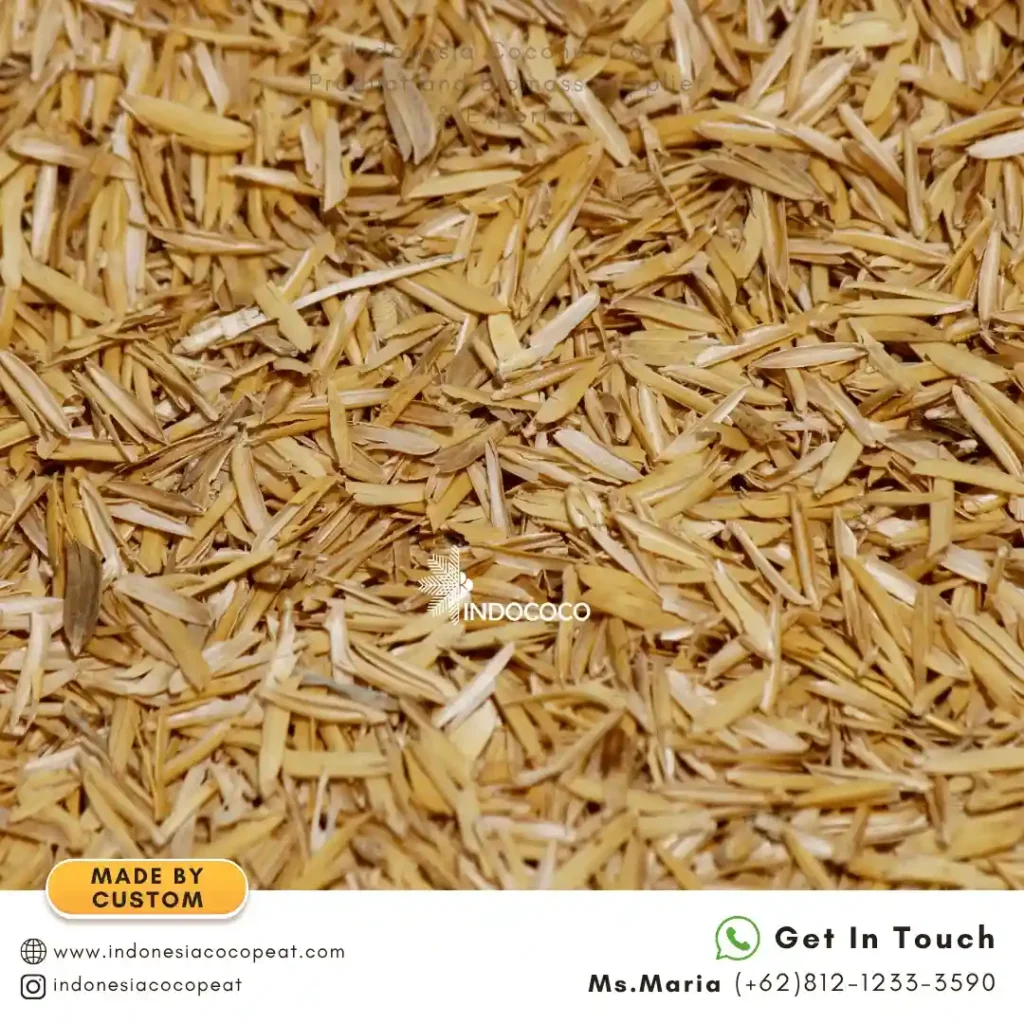
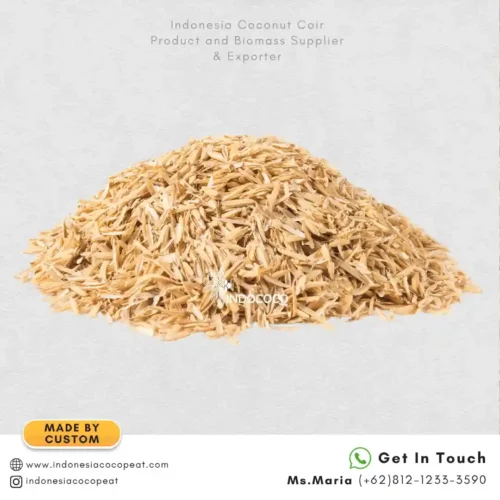
Raw rice husk is commonly used for composting, mulching, and growing media mixtures. Its natural structure provides bulk and helps improve physical conditions in selected soil applications. Before use, buyers should consider cleanliness, moisture content, and particle consistency.
Rice husk ash is produced by burning rice husk under controlled or uncontrolled conditions. The resulting ash contains a significant amount of silica, although its composition depends on combustion temperature and processing methods. It is used in applications such as construction materials, cement production, and selected industrial processes.
Another option is carbonized rice husk. This material is created through controlled heating with limited oxygen. The process changes the husk’s physical and chemical characteristics, producing a darker, porous material commonly used in horticulture and soil-related applications.
Industrial Applications Beyond Agriculture
The potential of rice husk extends beyond farming and plant cultivation. Its silica content makes it a useful raw material for industries seeking alternative sources of silica-based compounds. Depending on processing quality, rice husk ash can be further refined for specialized applications.
In construction, rice husk ash has been studied and used as a supplementary cementitious material. Its fine particles and reactive silica can contribute to concrete performance when the ash meets appropriate quality requirements. The actual results depend on factors such as particle size, silica composition, and burning conditions.
Rice husk is also explored as a renewable energy resource. Its organic components can be converted into heat through combustion or processed using other energy conversion technologies. This creates opportunities to utilize agricultural residues that might otherwise be discarded.
These applications demonstrate how a material traditionally associated with agricultural waste can become a valuable industrial resource.
Factors to Consider When Selecting Rice Husk
Not all rice husk materials have identical characteristics. Their quality can vary depending on rice varieties, milling practices, storage conditions, and processing methods. Buyers should evaluate several factors before choosing a supplier.
- Moisture content: Excessive moisture can affect storage stability and increase the risk of mold development.
- Cleanliness: Materials should be free from excessive soil, stones, plastic, and other unwanted contaminants.
- Particle size: Consistent particle dimensions support more predictable performance in growing media and industrial processes.
- Processing condition: Raw, carbonized, and ash materials serve different purposes and should not be treated as interchangeable.
- Packaging: Suitable packaging helps protect the material during transportation and storage.
For industrial applications, laboratory testing may also be necessary. Parameters such as ash content, silica composition, and chemical properties can help determine whether the material meets specific production requirements.
Supporting More Sustainable Agricultural Practices
Using rice husk effectively contributes to a more circular approach to agricultural production. Instead of allowing processing residues to accumulate, rice mills and other businesses can explore opportunities to turn them into useful materials.
This approach can support waste reduction while creating additional economic value for agricultural supply chains. It also encourages cooperation between rice producers, processors, manufacturers, and agricultural businesses.
Conclusion: Finding the Right Rice Husk for Your Needs
Rice husk is more than a by-product of rice milling. Its natural composition, lightweight structure, and potential for further processing make it useful across agriculture, horticulture, construction, and energy production.
Selecting the right material depends on its intended application and required specifications. Whether used as a growing media component, carbonized agricultural material, or a source of silica-rich ash, quality remains an important consideration. Working with a reliable supplier helps businesses obtain consistent materials and support more efficient resource utilization.
For further information, please contact WhatsApp (+62) 812-1233-3590 or email sales@arlion.co.id.